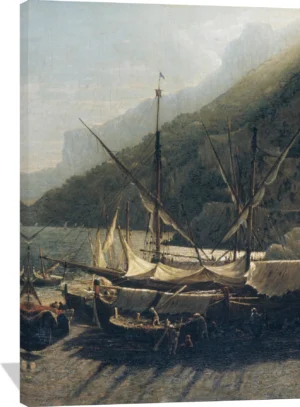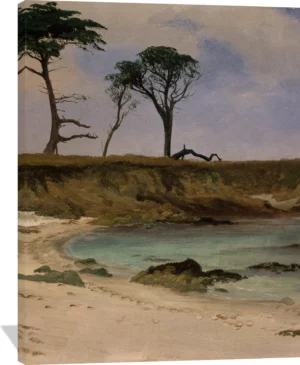
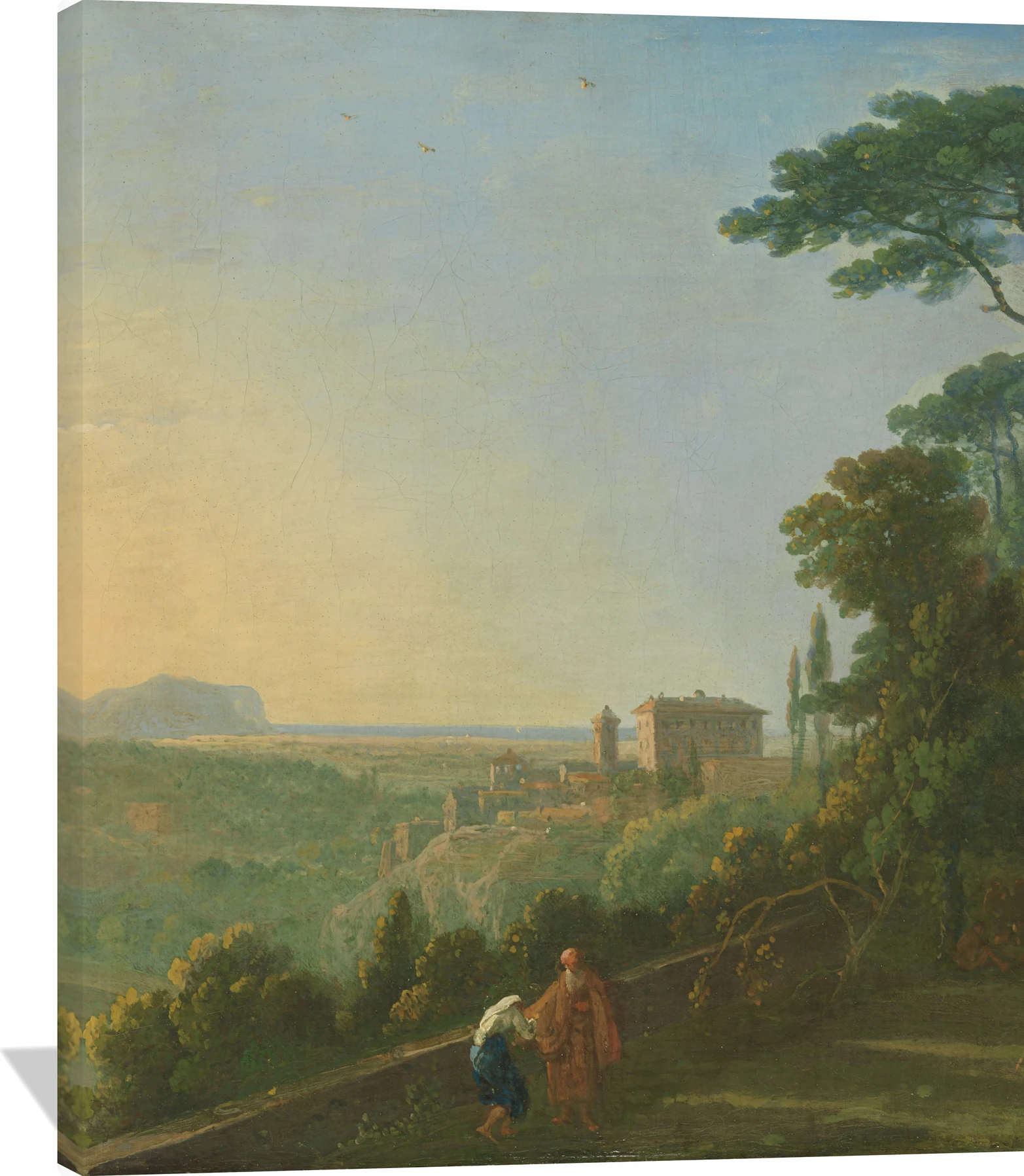
The Richard Wilson Lake Nemi and Genzano from the Terrace of the Capuchin Monastery canvas captures a serene Italian landscape bathed in golden light. Gentle blues, soft greens, and warm ochres blend harmoniously as distant hills, calm waters, and towering cypress trees evoke a timeless tranquility. Figures in the foreground lend a human touch to the grandeur of nature, inviting quiet reflection.
This elegant wall art brings classical sophistication to any space. Ideal for a living room, study, or entryway, this canvas print celebrates the poetic balance of light and landscape that defined Wilson’s mastery of 18th‑century British painting.
Richard Wilson (1712/13–1782) stands as one of Britain’s most influential early landscape painters, celebrated for elevating the genre to new artistic and cultural prominence. Born in Penegoes, Wales, and active during a formative period for British art, he helped define a distinctly British landscape tradition that would influence generations to come.
Artistic Style and Approach
Wilson’s work is known for its harmonious balance of natural observation and classical structure. Drawing inspiration from the landscapes of Italy, where he spent several years, he infused British scenery with a sense of poetic grandeur. His compositions often feature carefully orchestrated spatial depth, glowing atmospheric effects, and a serene interplay of light and shadow. This approach earned him recognition as a pioneering figure in the development of the idealized landscape style in Britain.
Notable Subjects and Themes
Wilson’s paintings typically depict sweeping rural vistas, tranquil lakes, mountainous terrains, and dramatic skies, capturing both the majesty and subtlety of the natural world. While he produced memorable views of the Welsh countryside, he also created influential Italianate works such as Lake Avernus with Aeneas and the Cumaean Sibyl. His ability to merge real topography with classical motifs made his images both evocative and enduring.
Cultural and Historical Significance
Widely regarded as a founder of the British landscape tradition, Wilson played a key role in shifting the artistic focus from portraiture toward nature as a subject of independent importance. His teachings and example shaped younger artists, and his legacy remained strong well into the Romantic era. Today, his paintings are admired for their refined composition, atmospheric subtlety, and their lasting influence on British art.