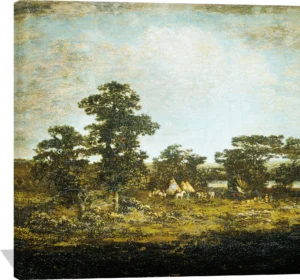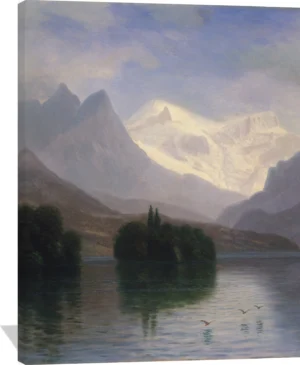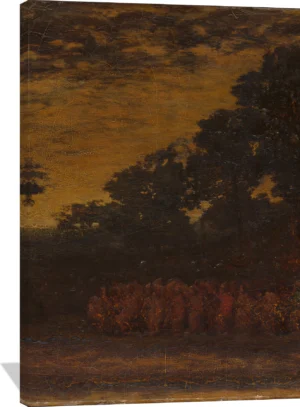
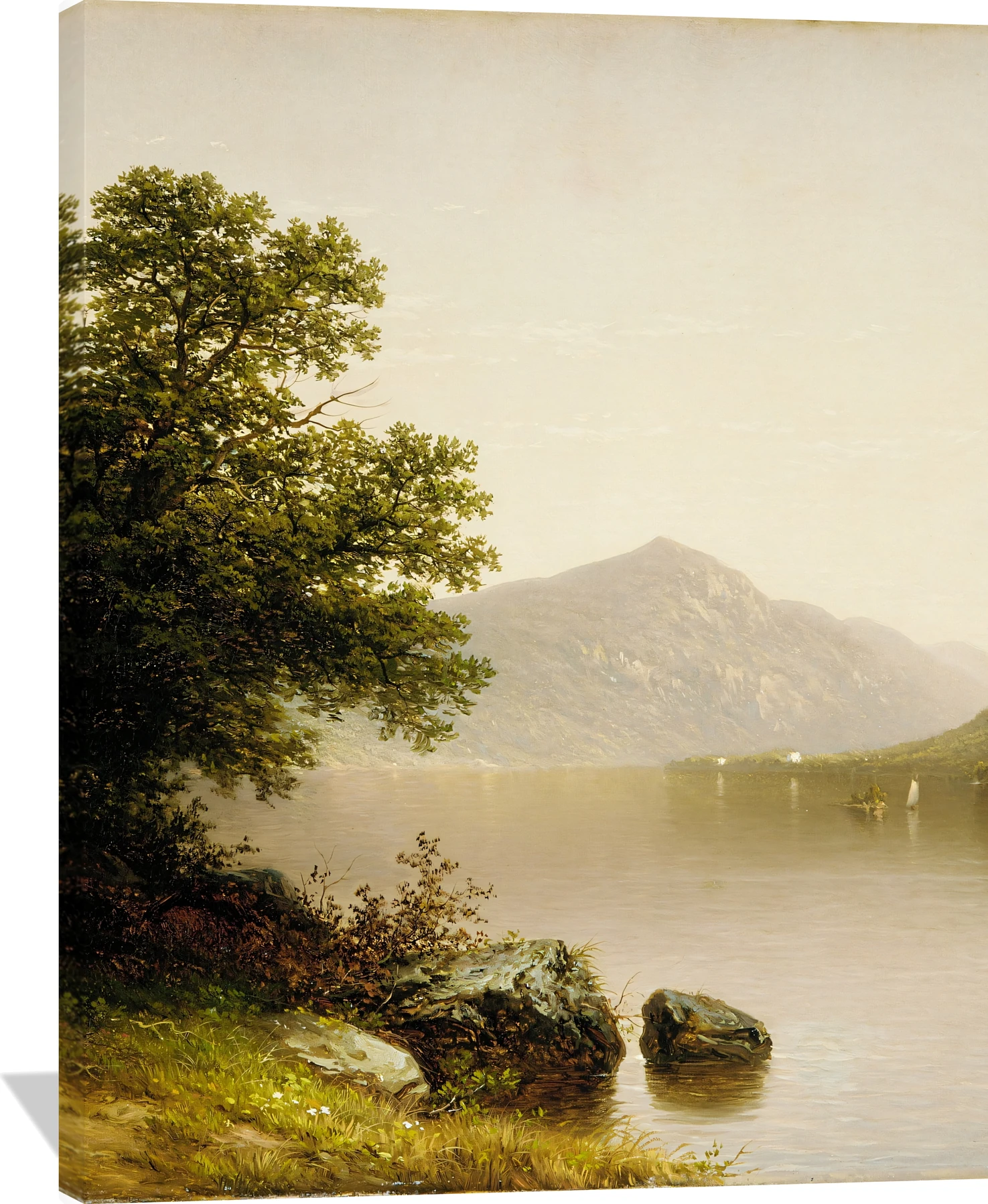
The serene beauty of nature unfolds in John William Casilear’s Lake George canvas, a masterful landscape that captures the tranquil harmony of water, mountain, and sky. Gentle tones of soft gold, moss green, and misty blue create a luminous calm, inviting the viewer into a peaceful lakeside retreat. Casilear’s refined brushwork and balanced composition evoke the quiet grandeur of the Hudson River School.
This timeless canvas print brings a sense of natural stillness and sophistication to any space. Perfect for a living room, study, or entryway, Lake George adds depth and warmth to interiors while celebrating the enduring beauty of the American landscape.
John William Casilear (1811–1893) was a distinguished American landscape painter associated with the Hudson River School. Born in New York and later active in Saratoga Springs, he transitioned from an early career in engraving to become a celebrated interpreter of the American natural landscape.
Artistic Style
Casilear’s work is known for its serene clarity, meticulous detail, and balanced compositions. His paintings often feature tranquil rivers, open skies, and luminous atmospheres that reflect the Hudson River School’s dedication to portraying nature with poetic restraint. His shift from engraving to painting is evident in his precise draftsmanship and refined handling of light.
Notable Subjects and Themes
He frequently depicted the valleys, lakes, and mountain ranges of New York and New England. Casilear favored calm, contemplative scenes over dramatic vistas, creating landscapes that invite quiet reflection. Works such as Lake George and View on the Hudson exemplify his focus on harmony, subtle tonal shifts, and the understated beauty of the American wilderness.
Contributions and Significance
As part of the circle surrounding Thomas Cole and other early Hudson River School painters, Casilear helped define a distinctly American vision of the landscape during the nineteenth century. His dedication to portraying nature with authenticity and restraint contributed to the movement’s rise and lasting influence. Today, he is recognized for his elegant clarity of vision and for artworks that capture the gentle majesty of the natural world.