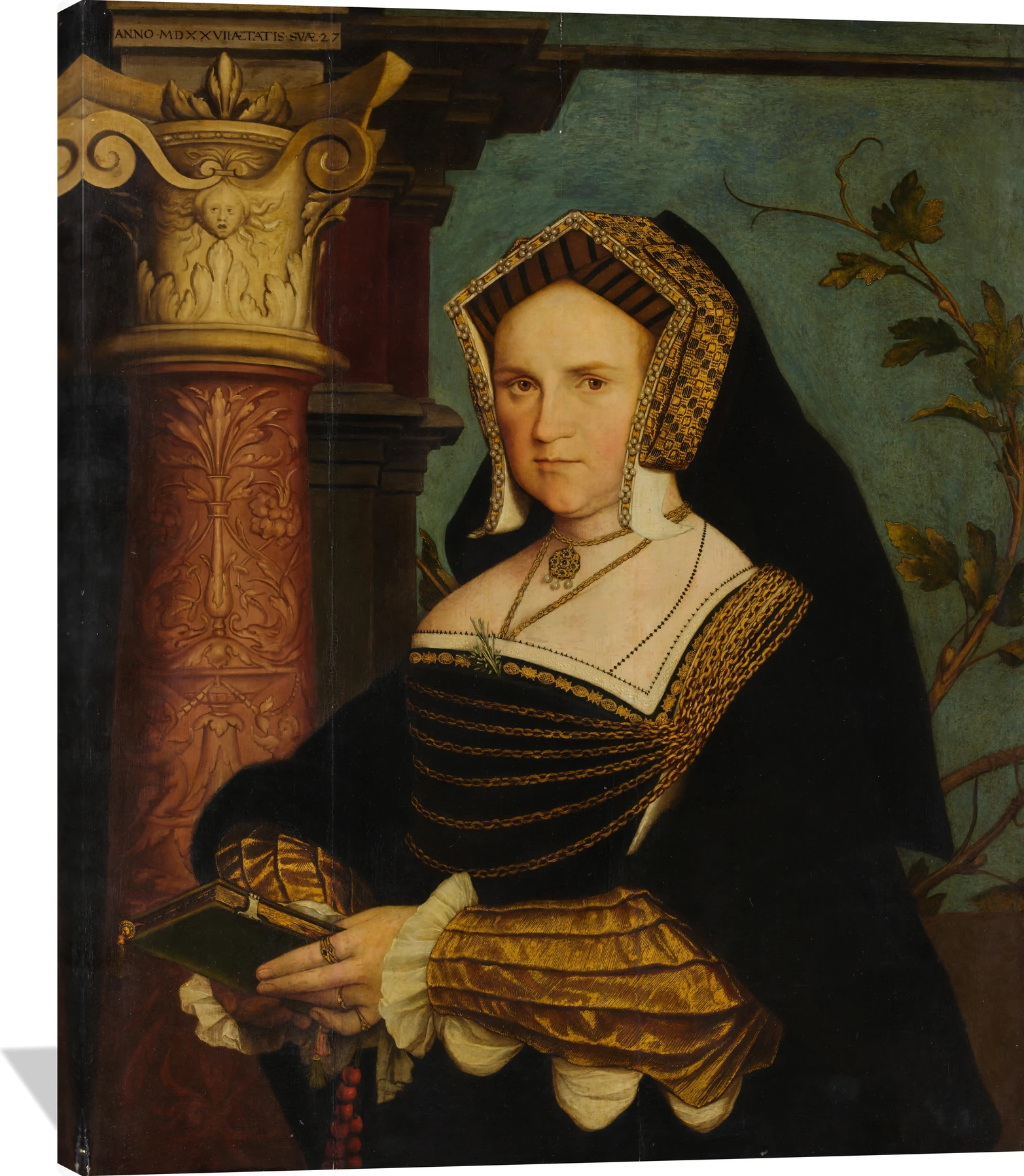
The Hans Holbein the Younger Lady Guildford (Mary Wotton, 1499–1558) canvas captures the quiet dignity and refined grace of Tudor portraiture. Rendered in rich tones of gold, black, and deep green, this masterful composition highlights Holbein’s precision and the sitter’s composed elegance against a stately architectural backdrop. The luminous textures and regal palette bring timeless sophistication to any interior.
This museum-quality canvas print adds a touch of historic grandeur to your living room, study, or entryway. A testament to British 16th-century artistry, it invites contemplation and admiration, making it a striking centerpiece for classic and modern spaces alike.
Hans Holbein the Younger (German, Augsburg 1497/98–1543 London) was one of the most influential painters of the Northern Renaissance, celebrated for his unmatched precision, psychological insight, and elegant visual clarity.
Artistic Style
Holbein’s work is defined by extraordinary draftsmanship, refined linear control, and a cool, meticulous realism. His portraits balance lifelike detail with a powerful sense of presence, revealing the character of his sitters through subtle expression and richly rendered textures. His ability to fuse Northern naturalism with Renaissance compositional harmony distinguishes him as a master of early modern portraiture.
Notable Contributions
Active in both Basel and the Tudor court in London, Holbein helped shape the visual identity of the 16th century. His incisive portraits of European humanists and English nobility including the iconic image of Henry VIII set a new standard for political and personal representation. His designs for printed works, religious imagery, and decorative arts further expanded his impact across media.
Typical Subjects
Holbein is best known for his penetrating portraits of scholars, diplomats, merchants, and royalty, often captured with remarkable clarity and restrained elegance. He also produced religious scenes, allegorical compositions, and book illustrations, including the influential Dance of Death series.
Cultural and Historical Significance
As a central figure of the Northern Renaissance, Holbein brought intellectual depth and visual sophistication to an era of profound cultural change. His portraits remain essential historical documents, and his mastery of realistic representation continues to influence artists today. A true innovator, Holbein stands as a defining force in the evolution of European portraiture and a key interpreter of the political and humanist currents of his time.