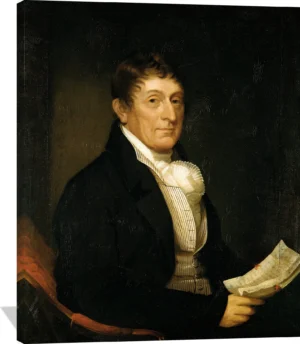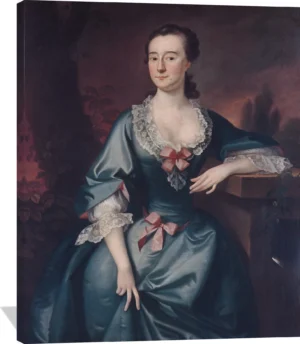
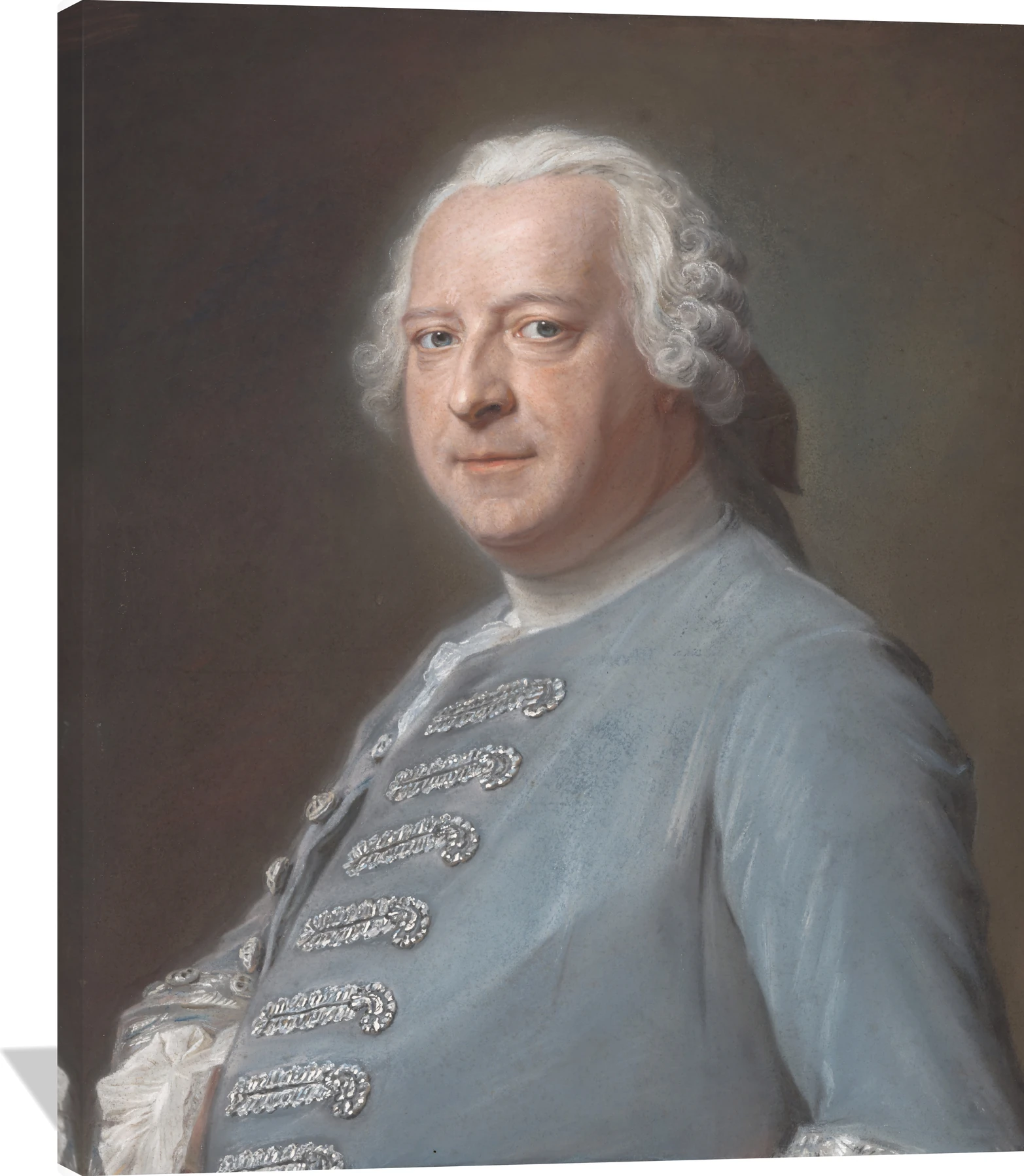
The Maurice Quentin de La Tour Jean Charles Garnier d’Isle (1697–1755) canvas captures the refined grace of 18th-century French portraiture. Rendered in soft pastel tones of powder blue, ivory, and warm flesh hues, this elegant wall art radiates poise and sophistication. The sitter’s confident gaze and delicate detailing evoke timeless charm and artistic mastery.
This exquisite canvas print brings a touch of classical refinement to any interior. Ideal for a living room, study, or entryway, it adds depth and historical character while maintaining a serene, polished aesthetic. A perfect choice for collectors and admirers of French artistry.
Maurice Quentin de La Tour (1704–1788) was a French Rococo master celebrated for his exquisite pastel portraits and unmatched ability to capture the vitality of Enlightenment-era society. Born and deceased in Saint-Quentin, he rose to prominence in Paris as one of the most sought-after portraitists of the mid‑18th century, admired for his sensitivity, precision, and psychological insight.
Artistic Style
La Tour’s distinctive command of pastel set him apart in an age dominated by oil painting. His technique produced velvety textures, radiant skin tones, and a remarkable sense of immediacy. With subtle gradations of color and deft handling of light, he rendered faces with lifelike warmth and emotional depth. This mastery secured his reputation as a pioneer of the pastel medium and a key figure of the French Rococo.
Subjects and Notable Contributions
Famed for portraying intellectual and cultural elites, La Tour created memorable likenesses of figures such as Voltaire, Madame de Pompadour, and King Louis XV. His portraits were not mere records of appearance; they conveyed character, intellect, and social presence. In works like his celebrated images of Voltaire, the artist captured both the wit and contemplative force of the writer, elevating portraiture into a form of subtle psychological study.
La Tour’s ability to reveal personality with immediacy and grace helped transform pastel into a respected fine-art medium. His refined approach remains influential, demonstrating how softness and precision can coexist in a single composition. His dedication to portraying the human spirit made him one of the era’s most esteemed portraitists and a central figure of the French artistic tradition.
Cultural and Historical Significance
Working during the height of the Enlightenment, La Tour documented the faces of a rapidly evolving intellectual world. His portraits stand today as invaluable visual records of the thinkers, artists, and aristocrats who shaped 18th‑century France. As a member of the Académie Royale de Peinture et de Sculpture, he helped formalize pastel’s status within academic art and championed its expressive potential.
Maurice Quentin de La Tour’s legacy endures through his extraordinary ability to blend elegance, realism, and psychological depth. His work continues to be celebrated for its refinement, emotional resonance, and masterful use of pastel, securing his place as one of the most distinguished portraitists of his time.