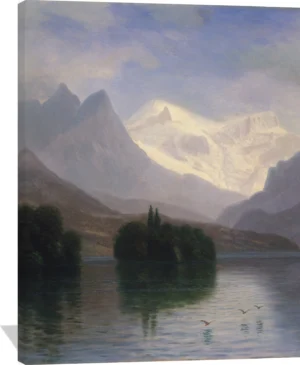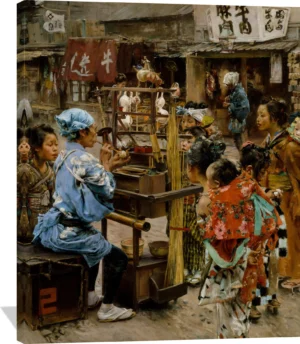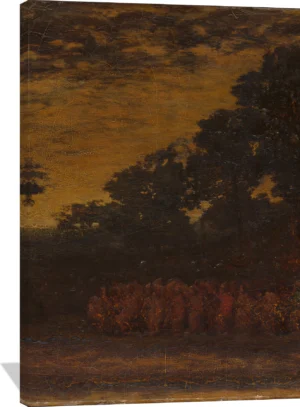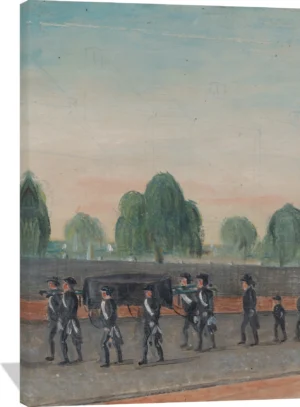
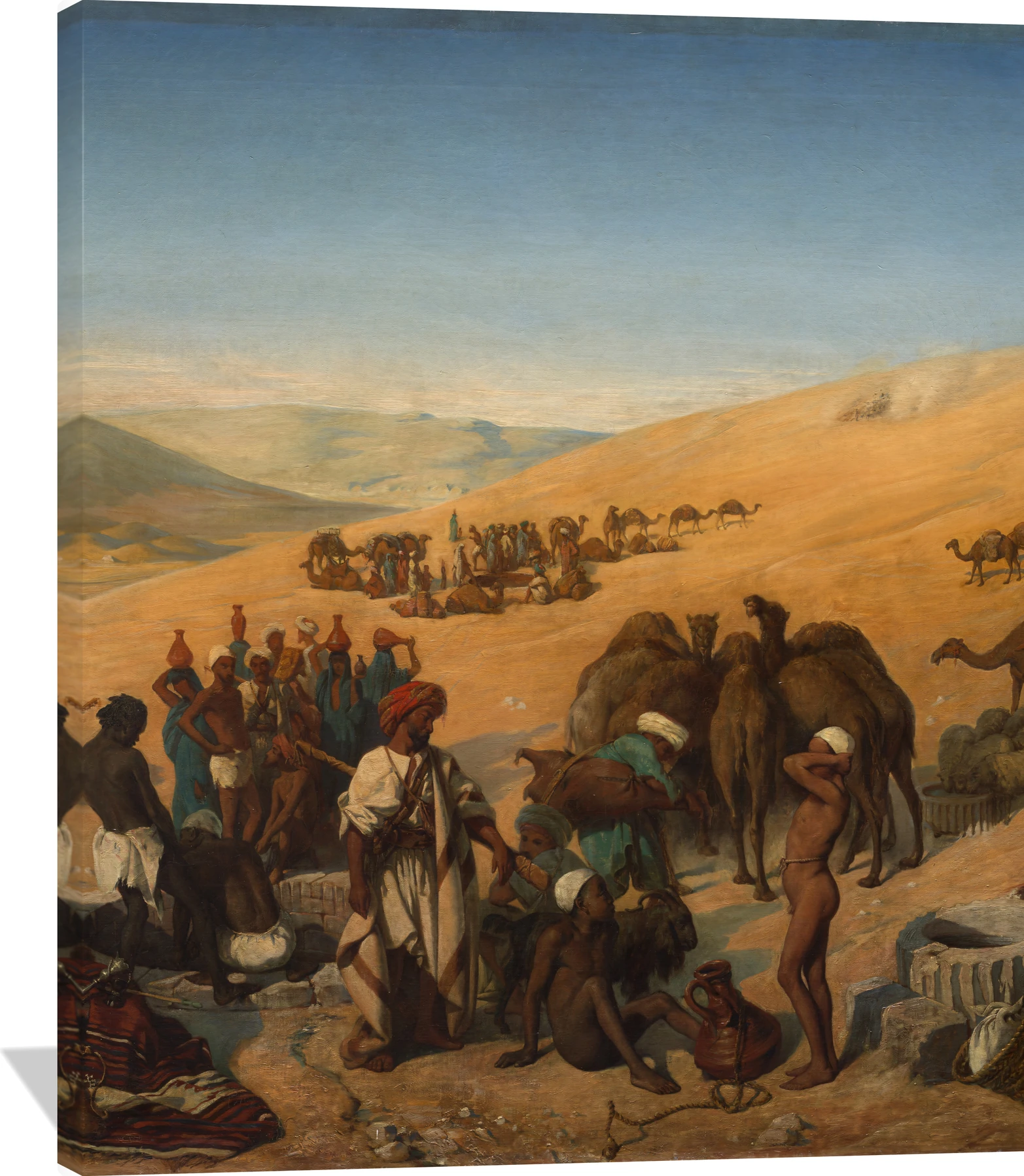
The Charles de Coubertin Halt of Caravans at the Wells of Saba (Beersheba) in the Desert South of Hebron canvas captures a timeless moment of rest amid sweeping desert dunes. Warm ochres, soft blues, and earthy browns blend harmoniously to evoke the vast stillness of the Middle Eastern landscape, while figures and camels gather in tranquil rhythm under a luminous sky.
This masterful wall art brings a sense of history and serenity to any interior. Ideal for a living room, study, or entryway, this canvas print invites reflection and wanderlust through its balance of human presence and natural grandeur.
Charles de Coubertin (1822–1908) was a French painter whose refined academic sensibilities and deep engagement with religious and historical subjects placed him among the quietly influential artistic figures of the 19th century. As part of a distinguished family of collectors and cultural patrons, he helped shape the intellectual environment that later nurtured his son, Pierre de Coubertin. His own artistic achievements, however, stand firmly on their own.
Artistic Style
Coubertin worked within a polished academic tradition, favoring controlled compositions, balanced proportions, and a disciplined handling of light. His paintings often embody a restrained yet expressive palette, revealing the influence of classical training while maintaining a distinctly personal sensitivity. He demonstrated a strong command of narrative imagery, offering viewers a contemplative experience rather than overt dramatization.
Subjects and Themes
Best known for religious scenes, devotional imagery, and stately landscapes, Coubertin approached each subject with an emphasis on serenity and clarity. His works frequently explore moral reflection and spiritual atmosphere, suggesting an artist deeply attuned to the symbolic power of visual storytelling. Even in his landscapes, there is a subtle sense of order and introspection that distinguishes his approach from more romantic contemporaries.
Notable Contributions
Though not associated with avant‑garde movements, Coubertin contributed meaningfully to the continuity of French academic art in an era marked by rapid stylistic change. His dedication to traditional techniques and his commitment to the values of craftsmanship reflect a steadfast artistic integrity. His influence also extended to the cultural sphere through his involvement in art collecting and his support of broader artistic discourse within France.
Cultural Significance
Coubertin occupies an important niche in 19th‑century French art as a representative of the learned, disciplined painter‑collectors who helped preserve classical ideals while France moved toward modernity. His work offers insight into the aesthetic and intellectual foundations that shaped a transformative period in European culture. Today, his paintings remain appreciated for their elegance, compositional harmony, and quiet emotional resonance, underscoring his role as a refined and thoughtful contributor to French artistic heritage.