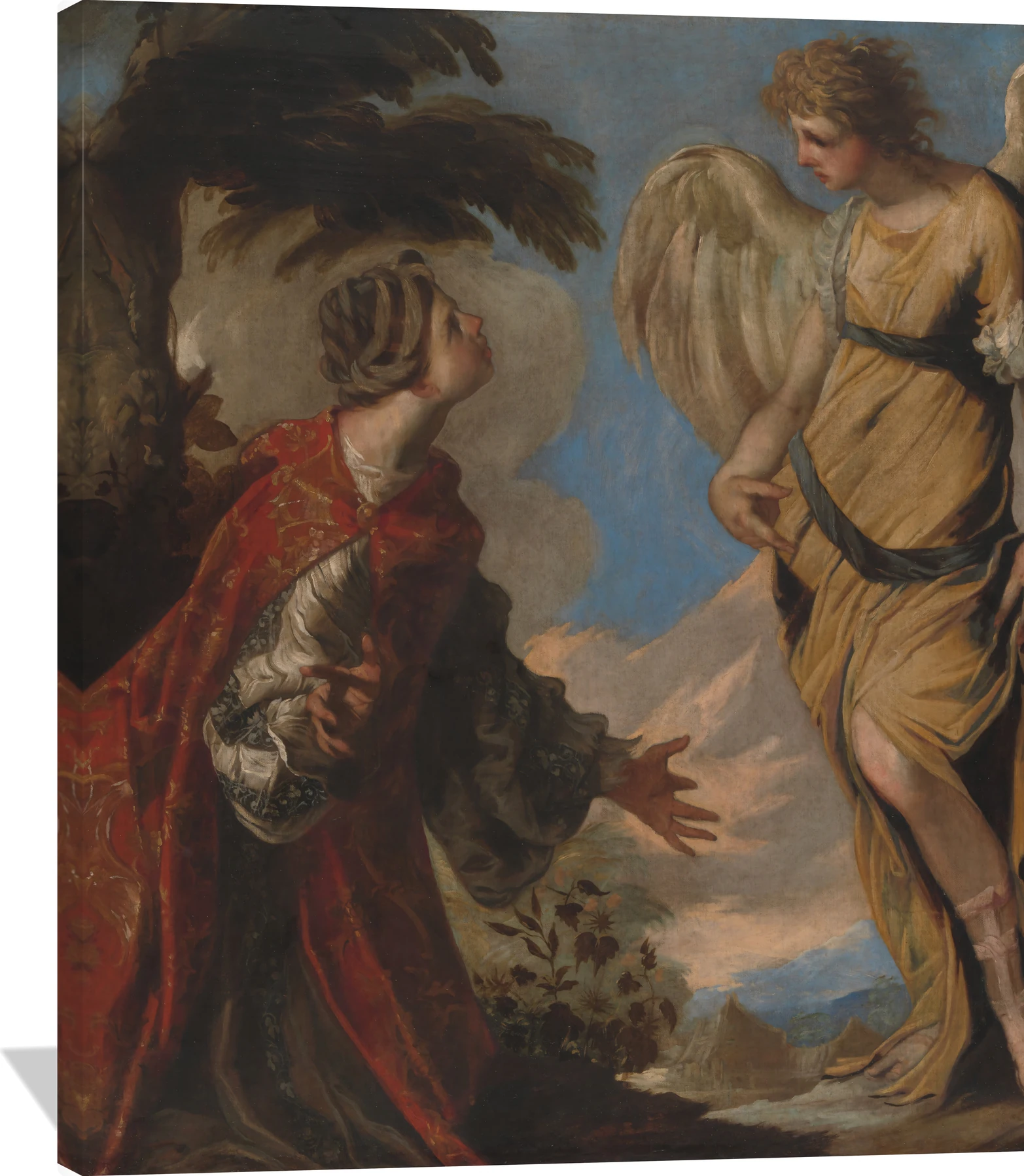
The Francesco Maffei Hagar and the Angel canvas captures a luminous Baroque encounter between the divine and the human. Bathed in warm golds, rich crimsons, and soft sky blues, the composition radiates movement and emotion as light falls dramatically across flowing fabrics and angelic wings. Maffei’s expressive brushwork and theatrical contrasts bring spiritual intensity to every detail.
This museum-quality canvas print brings timeless elegance to any interior. Ideal for a living room, study, or entryway, the Hagar and the Angel wall art invites contemplation and grace, transforming your space with the depth and drama of seventeenth-century Italian artistry.
Francesco Maffei (Vicenza, 1605–Padua, 1660) was an influential Italian Baroque painter celebrated for his energetic brushwork, emotional intensity, and luminous sense of movement. Active primarily in the Veneto, he helped shape the transition from the restrained elegance of early Venetian Baroque to a more expressive and imaginative visual language.
Artistic Style
Maffei’s paintings are distinguished by swirling compositions, dramatic contrasts of light and shadow, and a fluid, almost improvisational technique. His figures often appear in motion, enveloped in atmospheric effects that heighten both narrative tension and spiritual resonance. This dynamic approach became a hallmark of his mature style and contributed to the evolution of a more theatrical, visionary Baroque sensibility.
Subjects and Themes
He worked across a wide range of subjects, including religious stories, mythological scenes, allegories, and portraits. Maffei frequently favored moments filled with psychological intensity or supernatural presence, transforming traditional narratives into vivid, emotionally charged experiences. His inventive interpretations and expressive distortions contributed to the distinctive character of Venetian painting in the mid-seventeenth century.
Legacy and Significance
Maffei’s artistry left a lasting imprint on the artistic culture of the Veneto. His bold handling of paint and innovative compositions influenced later painters who sought greater freedom and expressive depth. Today, he is recognized for his role in shaping the more spontaneous and visionary branch of the Baroque, as well as for the unmistakable vitality that defines his work. His paintings continue to be admired for their dynamic energy and evocative atmosphere, qualities that make them compelling to contemporary audiences and collectors alike.