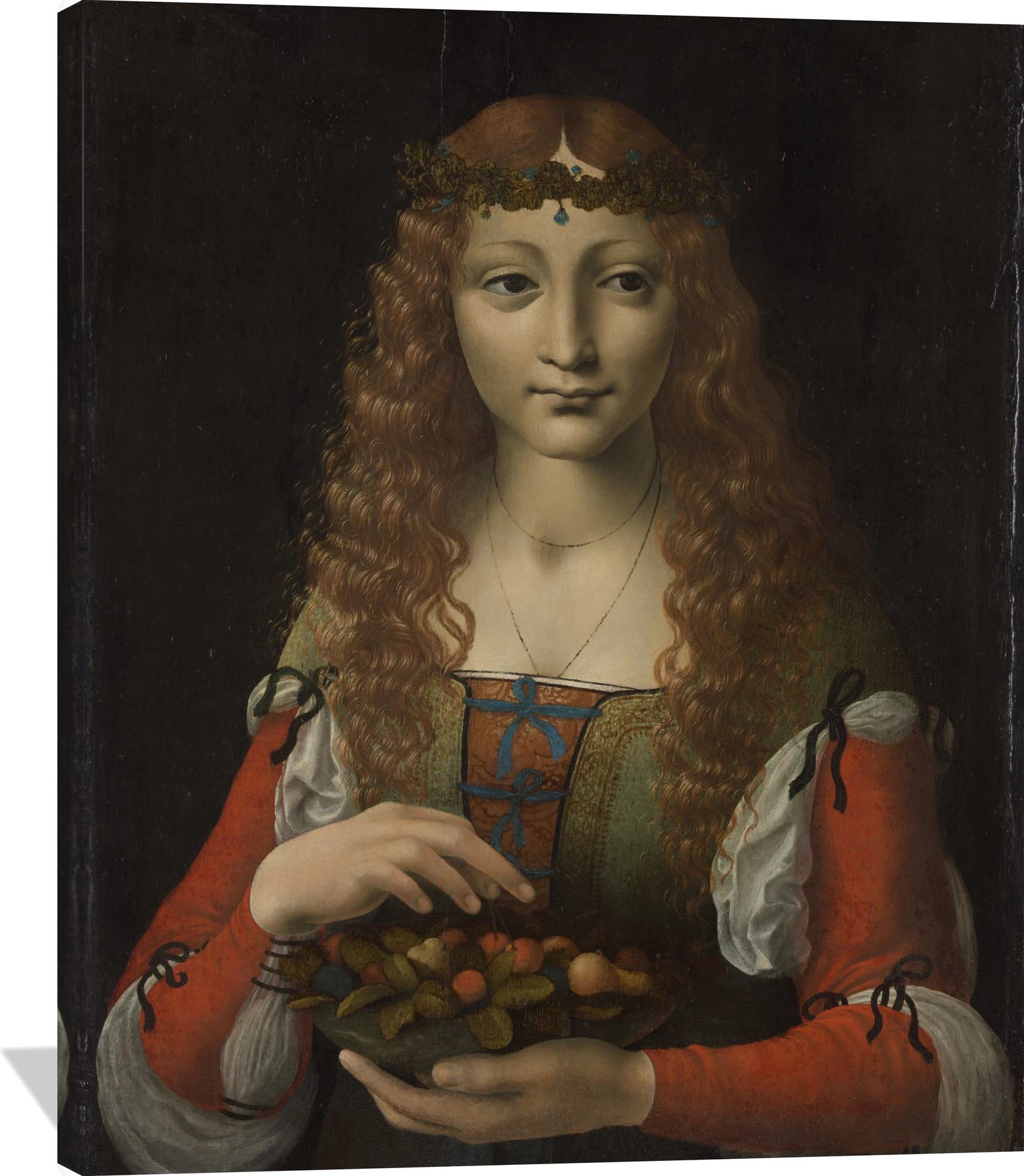
The Marco d’Oggiono Girl with Cherries canvas captures the quiet grace of Renaissance portraiture with luminous detail and timeless poise. The young woman’s serene expression, framed by flowing auburn curls and a delicate wreath, glows against a deep, shadowed background. Warm tones of red, gold, and olive green enrich the composition, creating a sense of intimacy and refinement.
This exquisite wall art brings classical beauty to any modern interior. Perfect for a living room, study, or entryway, this Girl with Cherries canvas print celebrates the artistry of Italian master Marco d’Oggiono (Milan, ca. 1467–1524) and infuses your space with enduring elegance and quiet sophistication.
Marco d’Oggiono (ca. 1467–1524) was an Italian painter from Milan whose career unfolded within the vibrant artistic circle surrounding Leonardo da Vinci. Known for his refined technique and devotional subjects, he played an important role in transmitting the visual language of the High Renaissance throughout Lombardy.
Artistic Style
d’Oggiono’s style reflects the harmonious balance and sculptural clarity associated with Leonardo’s workshop. His figures often display soft transitions of light and shadow, serene facial expressions, and carefully structured compositions. While deeply influenced by his master, he developed a distinctly personal touch marked by luminous color, crisp contours, and a strong sense of narrative focus.
Notable Contributions
Among his most recognized contributions is his involvement in producing early painted copies of Leonardo’s Last Supper, works that played a crucial role in preserving the appearance of the masterpiece as the original deteriorated over time. These reproductions, executed with precision and reverence, helped cement d’Oggiono’s reputation as a skilled interpreter of High Renaissance ideals.
Subjects and Themes
d’Oggiono frequently approached religious themes, creating altarpieces and devotional panels that conveyed spiritual intensity through elegant gestures and calm emotional rhythms. His depictions of the Holy Family, saints, and angelic figures emphasized purity, grace, and carefully modulated light. He also produced portraits characterized by measured realism and a thoughtful psychological presence.
Cultural and Historical Significance
As one of Leonardo’s closest Milanese followers, d’Oggiono acted as a crucial transmitter of the master’s visual innovations. His works offer insight into how Renaissance aesthetics spread through workshop practices, and they stand today as valuable records of a transformative artistic moment. His legacy endures through paintings that embody the refined beauty, clarity, and contemplative spirit of the Lombard Renaissance, making his oeuvre a meaningful touchpoint for collectors seeking art rooted in the heart of Italy’s cultural golden age.