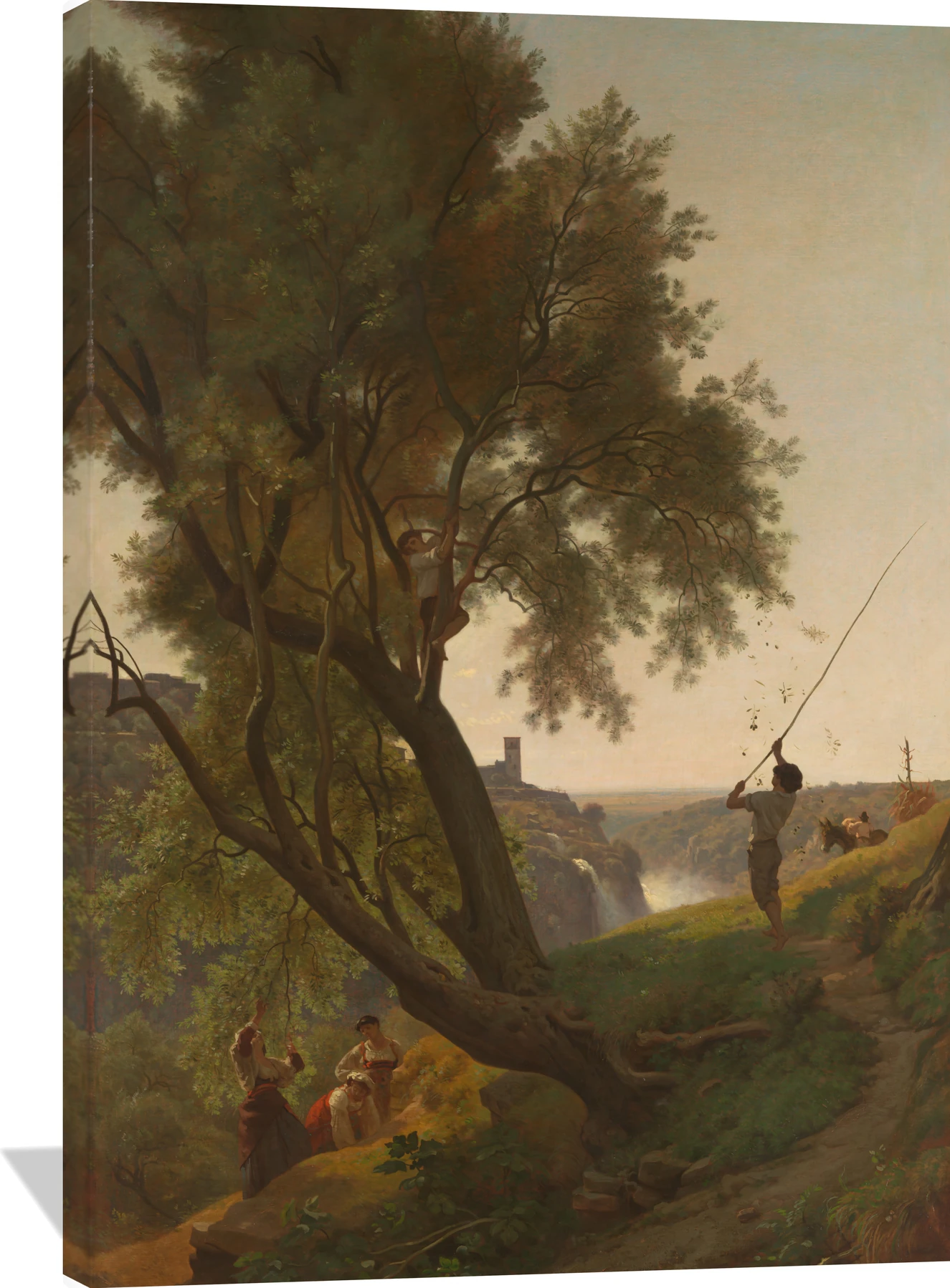
François-Louis Français’ Gathering Olives at Tivoli canvas captures a serene moment of rural life bathed in golden light. Figures harvest beneath sweeping olive trees, their gestures framed by a sunlit valley and distant waterfall. Warm earth tones, lush greens, and soft sky blues blend in a harmonious composition that evokes calm and timeless beauty.
This exquisite canvas print brings the tranquility of the Italian countryside into your home. Ideal for a living room, study, or entryway, it adds a refined touch of nature and artistry to any space—an elegant homage to 19th-century French landscape mastery.
François-Louis Français (1814–1897) was a distinguished French landscape painter born in Plombières-les-Bains, where he also spent his final years. Celebrated for his lyrical naturalism and refined draftsmanship, he emerged as one of the leading figures shaping nineteenth‑century French landscape art.
Artistic Style
Français combined the clarity of classical landscape traditions with the atmospheric sensitivity associated with the Barbizon School. His works are characterized by luminous tonal harmonies, finely observed vegetation, and balanced compositions that evoke both serenity and poetic introspection. Through subtle gradations of light and delicate line work, he achieved a distinctive blend of precision and mood.
Subjects and Themes
Nature was his enduring focus. Français painted forest interiors, riverbanks, pastoral clearings, and the gentle countryside of France, transforming familiar vistas into meditative scenes. He often infused his landscapes with mythological or allegorical undertones, grounding them in a timeless sensibility while remaining faithful to observed detail.
Legacy and Significance
A respected figure of his era, Français helped elevate landscape painting to new prominence in French art. His commitment to atmospheric realism and his harmonious use of color influenced contemporaries and reinforced the growing appreciation for nature as a subject in its own right. His work remains valued for its eloquent clarity and its ability to capture the quiet power of the natural world, embodying the enduring appeal of the nineteenth‑century French landscape tradition.