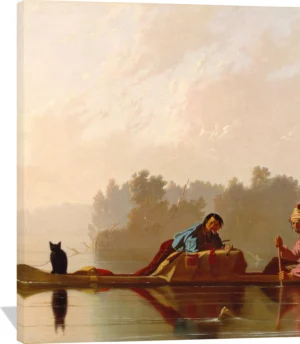
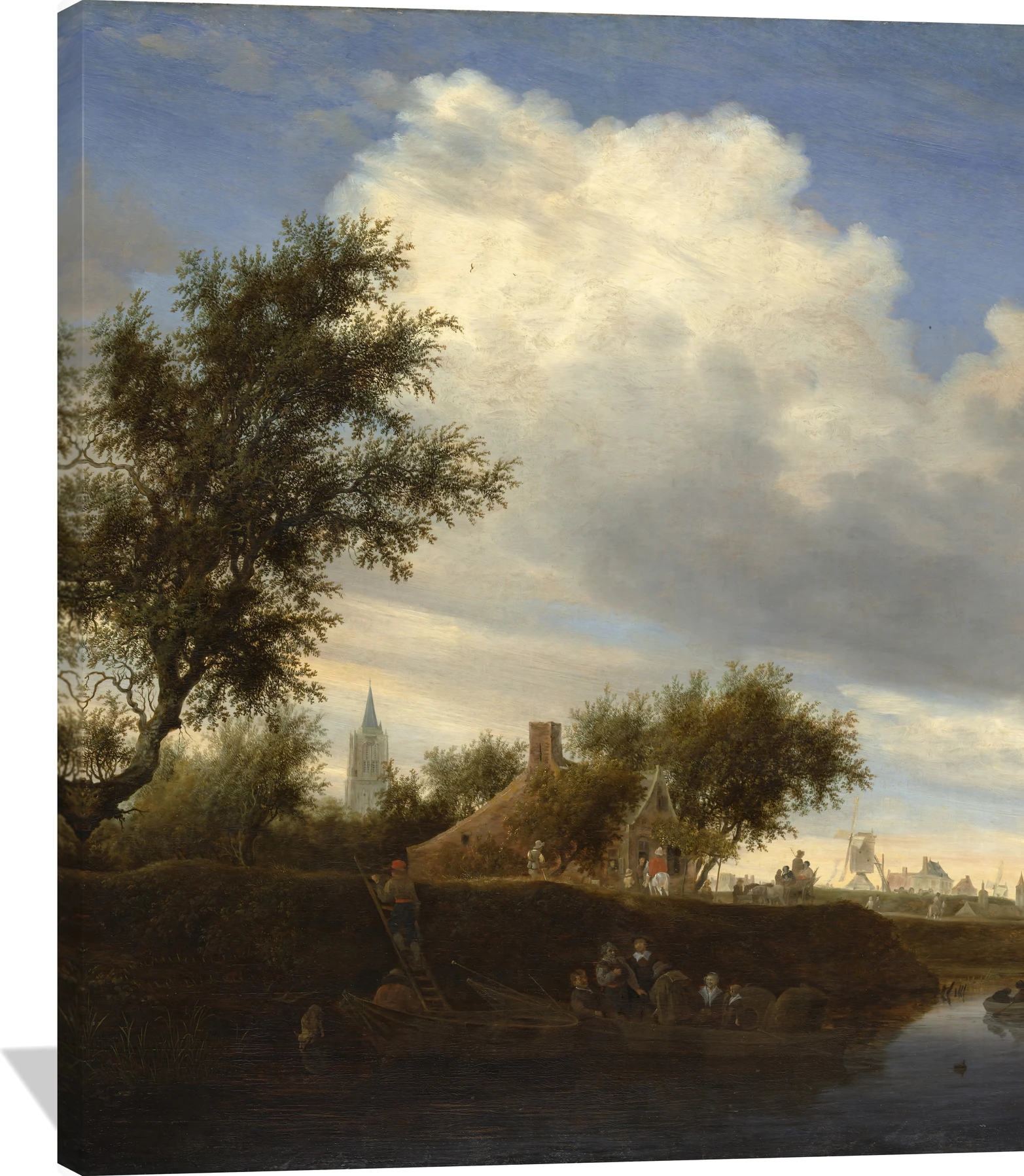
The Salomon van Ruysdael Ferry near Gorinchem canvas captures a tranquil Dutch riverside scene bathed in soft golden light. Gentle blues, earthy browns, and muted greens evoke a calm, timeless atmosphere as boats glide across still waters beneath expansive skies. Ruysdael’s masterful brushwork and luminous clouds create a sense of open air and quiet movement that draws the viewer in.
This elegant wall art brings classic serenity to any space, from a refined living room to a contemplative study. A canvas print of Ferry near Gorinchem adds depth, warmth, and a touch of 17th‑century Dutch artistry to your home décor.
Salomon van Ruysdael (Dutch, Naarden, born ca. 1600–1603–1670 Haarlem) was a leading landscape painter of the Dutch Golden Age, celebrated for his refined naturalism and masterful command of atmosphere. His work embodies the quiet grandeur of the Dutch countryside, offering scenes that feel both intimate and expansive.
Artistic Style
Ruysdael’s paintings are distinguished by their serene tonal harmony, fluid brushwork, and carefully calibrated light. He favored a restrained palette that enhances the sense of depth and spatial clarity, often using soft blue-grays and warm earth tones to evoke shifting weather and time of day. His compositions are notable for their balanced structure, guiding the viewer’s eye across tranquil waterways, rustic architecture, and open skies.
Subjects and Themes
Best known for his river landscapes, ferry crossings, and sweeping panoramic views, Ruysdael captured the rhythms of everyday Dutch life with understated elegance. He frequently depicted boats drifting along calm waters, travelers crossing country roads, and towns emerging gently from the horizon. Works such as Ferry on a River and View of Deventer exemplify his ability to blend human presence seamlessly with the natural world.
Notable Contributions
A prominent figure within the Haarlem school of landscape painting, Ruysdael played a key role in elevating landscape art to new levels of sophistication during the 17th century. His subtle atmospheric effects and truthful observation helped establish a more naturalistic direction in Dutch landscape painting, influencing contemporaries and later generations. His work embodies the period’s shift toward everyday realism, capturing the Dutch Republic’s environment with remarkable sensitivity.
Cultural Significance
Ruysdael’s paintings offer a vivid window into the environmental and social character of the Dutch Golden Age. Admired for their calm beauty and their harmonious sense of place, his landscapes remain enduring symbols of Dutch artistic achievement. His legacy is defined by the quiet power of scenes that honor both nature’s breadth and the subtleties of daily life.