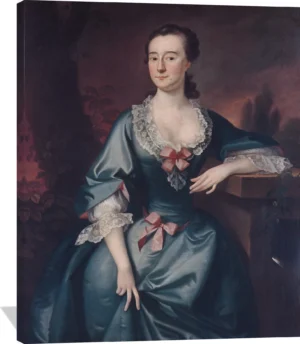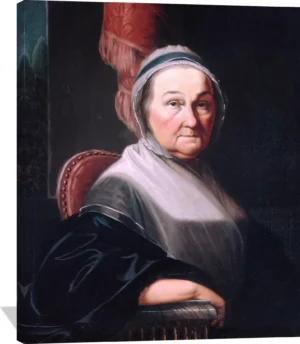
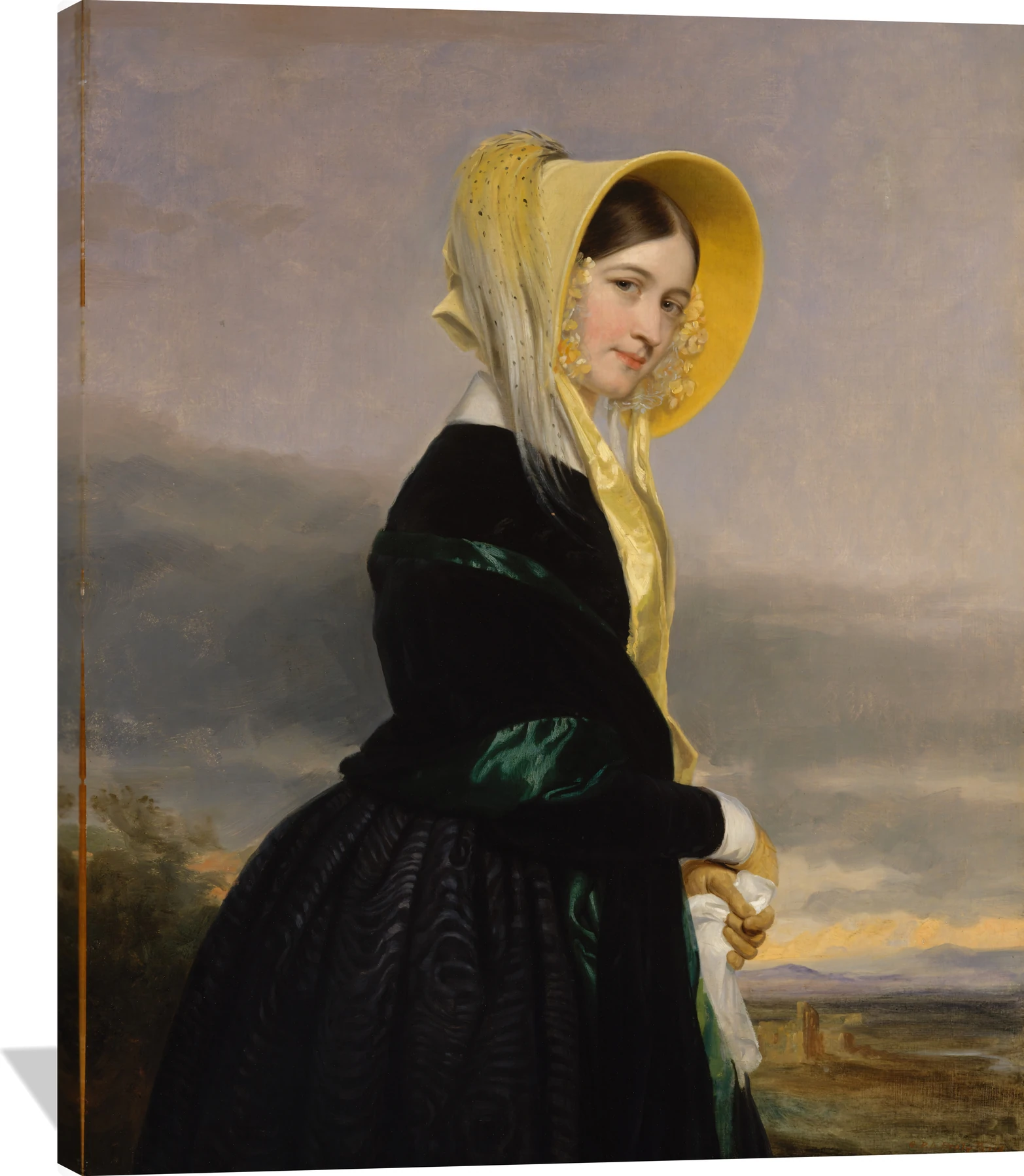
The George P. A. Healy Euphemia White Van Rensselaer canvas captures timeless grace through delicate light, refined textures, and a serene palette of gold, emerald, black, and soft lavender. The portrait’s poised figure and tranquil landscape evoke quiet confidence and 19th-century elegance, making it a striking focal point for any refined interior.
This exquisite canvas print brings historic sophistication to your living room, study, or entryway. Healy’s masterful brushwork and subtle interplay of light and shadow lend depth and warmth, transforming your wall art collection with a touch of classic beauty and enduring style.
George P. A. Healy (1813–1894) was one of the most respected American portrait painters of the nineteenth century, celebrated for his refined technique and keen ability to reveal character through composition and expression.
Artistic Style
Healy’s work is distinguished by its polished realism, balanced compositions, and subtle psychological depth. His portraits combine a smooth, luminous surface with an understated elegance that reflects his training in Paris and his deep understanding of European academic painting.
Notable Contributions
Renowned for capturing the likenesses of political and cultural leaders, Healy produced an expansive body of work that includes depictions of U.S. presidents, statesmen, and influential figures of his era. His paintings are noted for their poised naturalism and for the way they elevate portraiture into a form of visual biography. Healy’s ability to render personality with restraint and dignity made him one of the most sought‑after portraitists of his time.
Subjects and Themes
Although best known for official and private portraits, Healy also created historical scenes and group compositions. His subjects are consistently portrayed with clarity and respect, reflecting a deep interest in individual identity and public legacy. Many of his sitters became emblematic of nineteenth‑century American society.
Cultural Significance
Healy’s oeuvre offers a compelling visual record of political and cultural life in the United States and Europe during a period of profound transformation. His work remains valued for its refined execution, historical insight, and ability to convey the presence of notable figures with enduring sophistication and quiet authority.