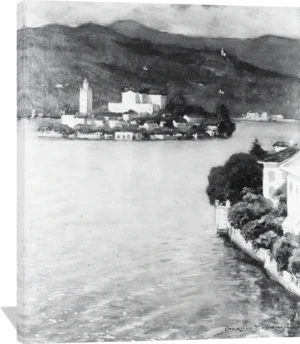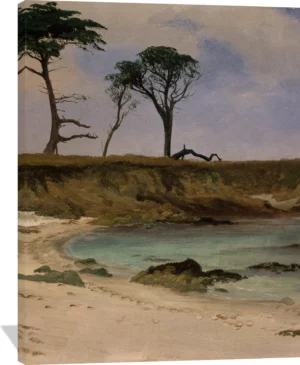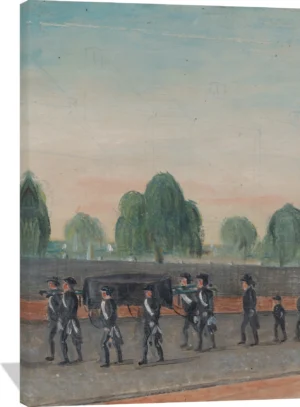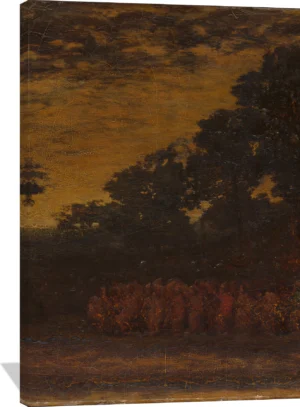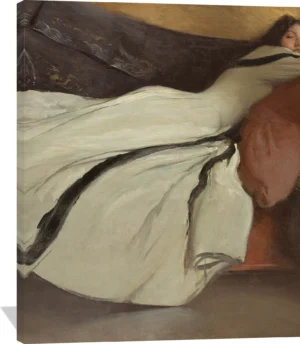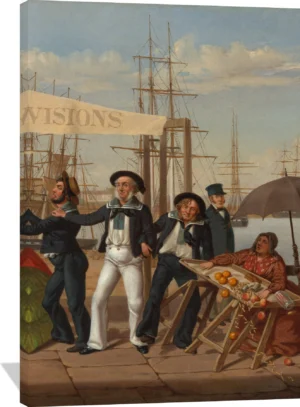
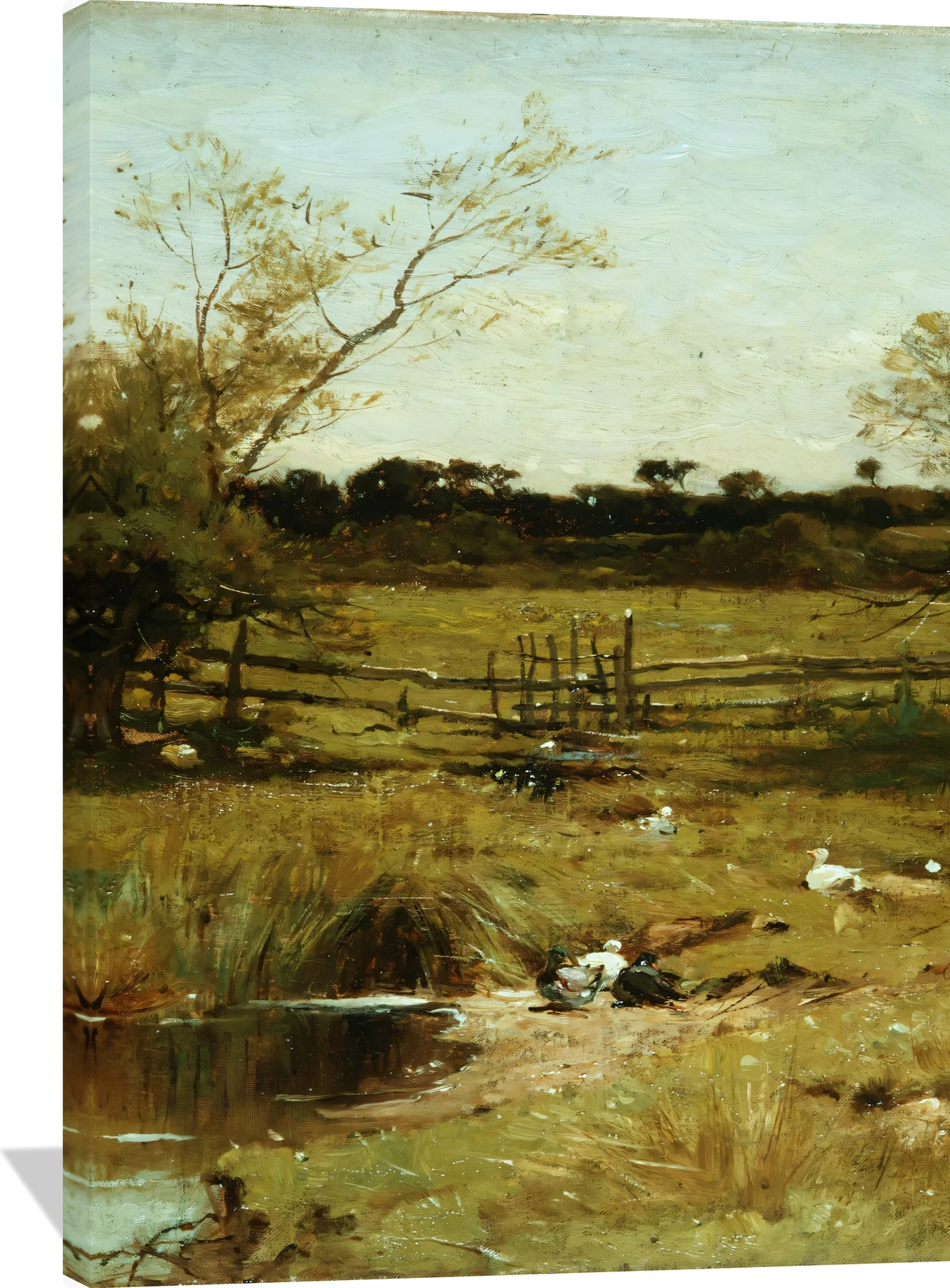
The George Henry Smillie East Hampton Meadows canvas captures the quiet charm of a pastoral landscape bathed in soft daylight. Earthy greens, warm browns, and gentle sky blues blend in a serene composition of open meadows, rustic fences, and calm water reflections. Smillie’s refined brushwork evokes a timeless sense of peace and natural harmony.
This exquisite wall art brings a touch of classic American landscape painting to any space. Perfect for a living room, study, or entryway, this canvas print invites a moment of stillness and connection to the beauty of the countryside.
George Henry Smillie (1840–1920) was an American landscape painter whose career unfolded in New York during a pivotal era for the nation’s artistic identity. Trained within a family of accomplished artists, he developed a refined sensibility for depicting the American landscape with clarity, intimacy, and poetic restraint.
Artistic Style
Smillie’s work is rooted in the traditions of the Hudson River School and early American naturalism, yet it carries a quieter, more contemplative tone. His brushwork is meticulous but never rigid, allowing light, atmosphere, and texture to harmonize across each composition. He favored gentle tonal transitions and a measured realism that emphasized the serene beauty of the natural world.
Subjects and Themes
Smillie often painted coastal scenes, rocky shorelines, forest interiors, and rural vistas, capturing the subtle drama of the American environment. Streams, meadows, and secluded inlets recur throughout his oeuvre, rendered with a sensitivity that reflects both observation and affection. His landscapes avoid spectacle; instead, they highlight the quiet vitality found in everyday scenery.
Legacy and Significance
Respected in his time and connected to a lineage of influential artists, Smillie contributed meaningfully to shaping an American visual language rooted in nature. His paintings embody a moment when artists sought to balance realism with emotional depth, celebrating the country’s still-untouched expanses. Today, collectors admire his work for its craftsmanship, its lyrical calm, and its ability to evoke the enduring appeal of the American landscape.