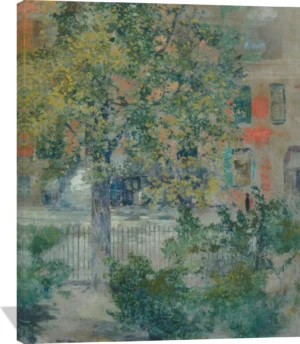

Joseph De Martini’s Docks on Sunday canvas captures a quiet moment of urban life along the waterfront, where figures gather under a deep blue sky framed by warm brick and moss-green buildings. The scene’s painterly geometry and moody light evoke both stillness and community, creating a timeless sense of place.
This expressive wall art brings a contemplative yet inviting atmosphere to any space. Ideal for a living room, study, or entryway, this canvas print reflects De Martini’s modern American vision—balancing structure, color, and human presence in perfect harmony.
Joseph De Martini (1896–1984) was an American painter whose refined realism and sensitivity to light made him a distinctive voice in twentieth-century art. Born in Mobile, Alabama, and later based in Boston, he developed a mature style that blended traditional draftsmanship with a modern eye for atmosphere and mood.
Artistic Style
De Martini is best known for his luminous realist paintings, often executed in oil or watercolor. His work is characterized by precise modeling, softly diffused light, and a quiet emotional register. He frequently explored intimate, contemplative moments, using subtle tonal shifts and carefully structured compositions to create scenes that feel both spontaneous and meticulously observed.
Subjects and Themes
Among his most celebrated subjects are elegantly rendered female figures, sunlit beaches, and serene interior settings. His beach scenes, in particular, showcase his mastery of color harmony and atmosphere, capturing the interplay of sunlight, sand, and reflective surfaces. Whether depicting a solitary figure or a coastal vista, De Martini emphasized stillness and introspection, giving his work a sense of timeless calm.
Legacy and Significance
De Martini’s paintings reflect a commitment to craftsmanship at a time when American art was rapidly shifting toward abstraction. His dedication to figurative clarity and tonal nuance places him within the lineage of American realists who prioritized observation over experimentation. Collectors value his work for its balance of technical precision and understated emotional depth, as well as for its contribution to a continuing tradition of American figurative painting.