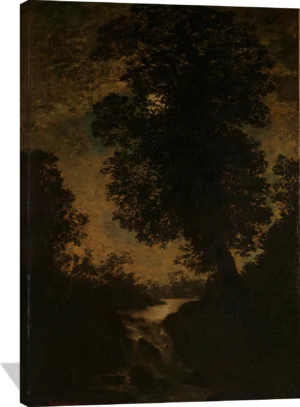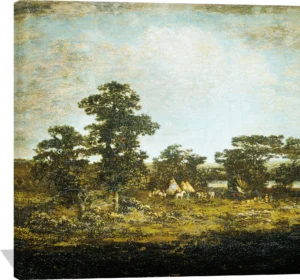
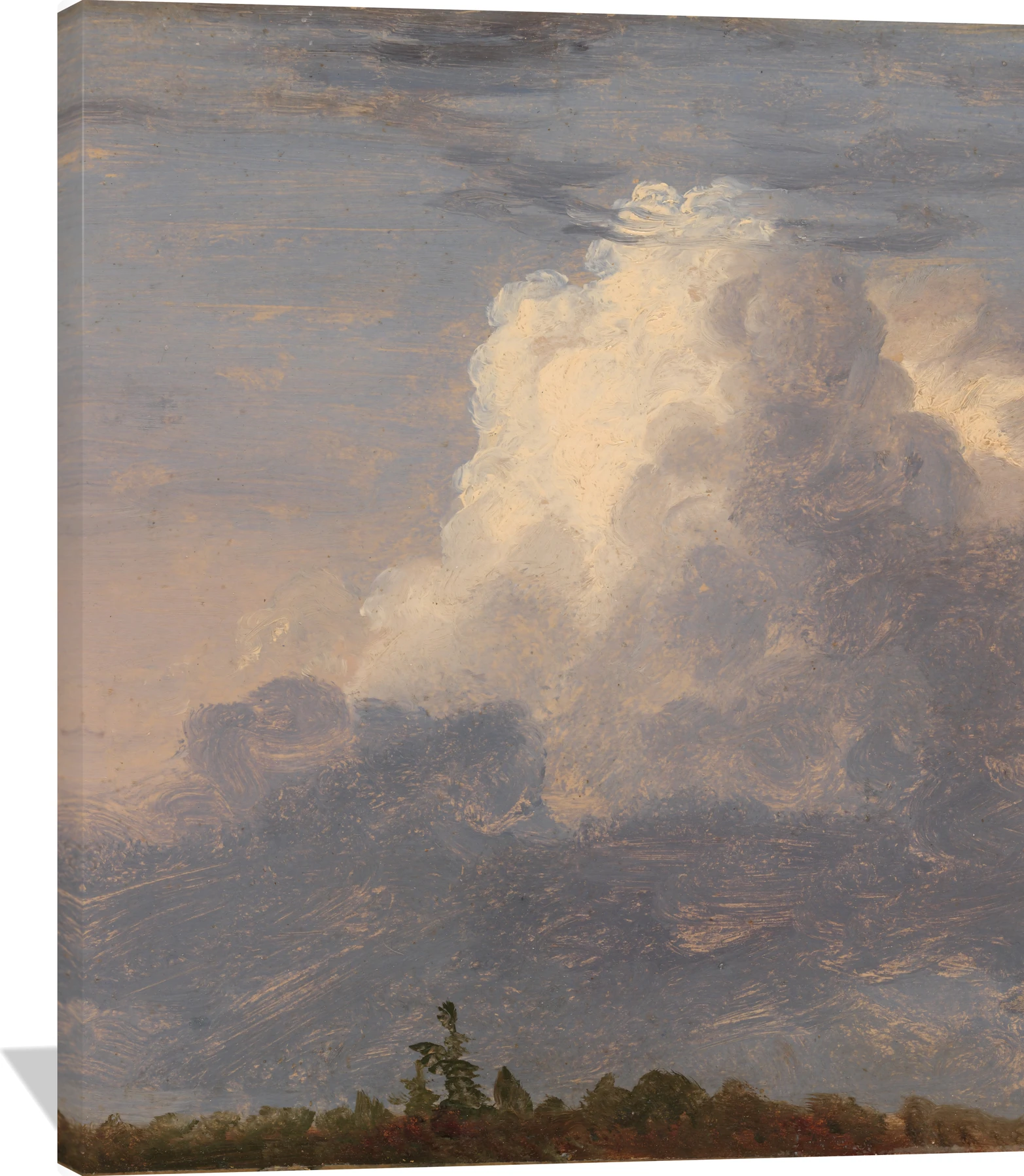
The Thomas Cole Clouds canvas captures the quiet grandeur of nature in a moment of luminous stillness. Soft tones of slate blue, rose, and ivory blend across the sky, where towering clouds rise above a distant horizon. Cole’s painterly brushwork and romantic sensibility invite calm reflection, making this wall art a timeless statement of serenity and depth.
Perfect for a living room, study, or entryway, this canvas print brings the poetic beauty of the American landscape into your home. The Clouds canvas evokes both atmosphere and emotion—an elegant tribute to the power of light and sky.
Thomas Cole (American, Lancashire 1801–1848 Catskill, New York) was a pioneering figure of the Hudson River School and a foundational voice in nineteenth‑century American landscape painting. His work helped define a new artistic identity for the young nation, emphasizing the sublime grandeur of the natural world and the spiritual resonance found within it.
Artistic Style
Cole is best known for his dramatic, meticulously rendered landscapes that blend realistic detail with imaginative, often allegorical elements. His paintings combine crisp natural observation with sweeping atmospheric effects, creating vistas that feel both intimate and monumental. This distinctive synthesis of realism and romanticism became a hallmark of the Hudson River School and established Cole as its undisputed founder.
Subjects and Themes
Cole frequently depicted the untamed wilderness of the northeastern United States, capturing mountains, rivers, and forests with a reverence that reflected both environmental awareness and philosophical depth. Many of his works explore themes of nature’s purity, the passage of time, and the tension between civilization and the natural world. His celebrated cycles, including narratives such as The Course of Empire, use landscape as a stage for broader meditations on human ambition and decline.
Cultural and Historical Significance
As one of the first major landscape painters in America, Cole played a pivotal role in shaping the nation’s visual culture. His paintings encouraged viewers to see the American landscape not merely as scenery, but as a source of identity, contemplation, and moral insight. Through his influence on students and contemporaries, he helped establish the tradition of American landscape art as a distinctive and enduring pillar of the country’s artistic heritage. His legacy endures in the continued appreciation of the natural world as a subject of both beauty and profound meaning, a perspective he articulated with exceptional vision and enduring poetic power.