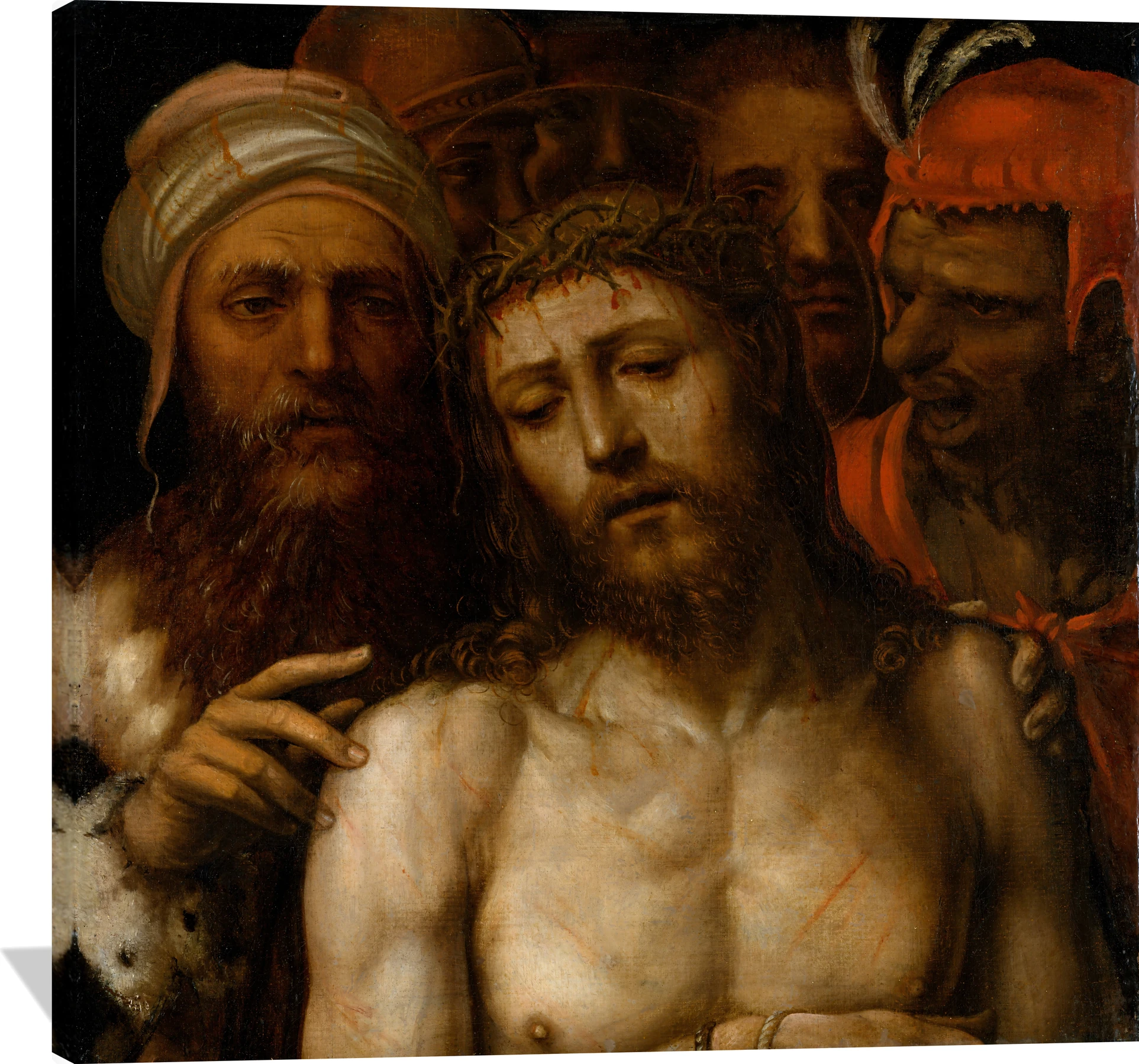
The Sodoma Christ Presented to the People (Ecce Homo) canvas captures a moment of profound emotion and spiritual depth. Rendered in rich earth tones, deep reds, and golden highlights, this Renaissance masterpiece evokes both compassion and reverence through its intimate portrayal of Christ crowned with thorns. The dramatic contrast of light and shadow enhances the figures’ humanity and solemn intensity.
This museum-quality canvas print brings timeless artistry to any refined space. Ideal for a living room, study, or entryway, it invites quiet reflection and conversation. The Christ Presented to the People (Ecce Homo) wall art embodies the grace and mastery of Giovanni Antonio Bazzi, known as Sodoma, offering a striking focal point for classic and contemporary interiors alike.
Giovanni Antonio Bazzi, known as Sodoma, was an Italian painter born in Vercelli in 1477 and active primarily in Siena until his death in 1549. Celebrated for his refined blend of Lombard naturalism and the graceful rhythms of the High Renaissance, he developed a style that was both expressive and deeply poetic.
Artistic Style and Approach
Sodoma’s work is distinguished by its luminous color, delicate modeling, and a lyrical sensibility that set him apart from many of his contemporaries. His figures often possess a gentle emotional depth, rendered with elegant contours and a vivid attention to psychological nuance. This ability to merge realism with a subtle, dreamlike atmosphere remains one of his most defining traits.
Notable Contributions
Among his most celebrated achievements are his contributions to the fresco cycles of Siena and Rome, where he produced scenes noted for their narrative clarity and expressive resonance. Works such as his contributions to Monte Oliveto Maggiore and the Roman frescoes commissioned during the papacies of Julius II and Leo X illustrate his mastery of large-scale composition and his gift for imbuing sacred subjects with a human, approachable warmth.
Subjects and Themes
Sodoma favored religious themes, portraits, and mythological scenes, approaching each with a balance of emotion and elegance. His portrayals of saints, biblical narratives, and classical figures demonstrate both technical finesse and a distinctive sensitivity. Whether depicting the tender intimacy of a devotional scene or the dynamic drama of a historical moment, he infused his subjects with a quietly compelling vitality.
Cultural and Historical Significance
Positioned at the crossroads of Lombard and Sienese traditions, Sodoma played a vital role in bridging regional artistic languages during the Renaissance. His ability to blend influences into a unified and resonant style contributed to the cultural richness of early sixteenth-century Italy. Today, he is recognized as a painter of remarkable individuality, valued for his expressive elegance and the refined emotional depth that characterizes his work.