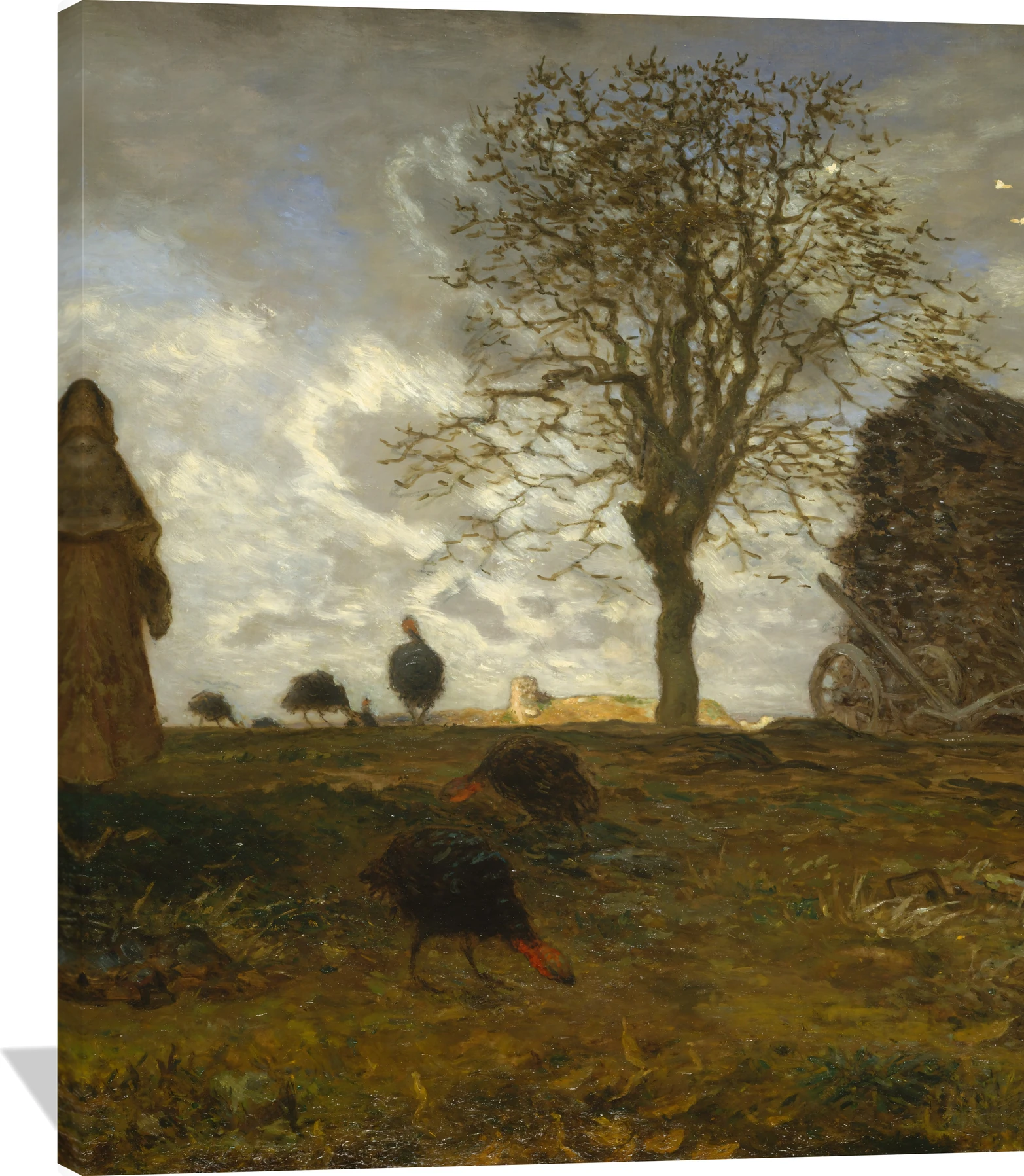
The Jean-François Millet Autumn Landscape with a Flock of Turkeys canvas captures the quiet poetry of rural life beneath a soft, moody sky. Earthy browns, muted greens, and silvery blues blend with golden light to evoke the calm of harvest season and the dignity of nature’s rhythm. Millet’s masterful brushwork and atmospheric depth make this pastoral scene both intimate and timeless.
Perfect as wall art for a living room, study, or entryway, this canvas print brings a sense of serenity and reflection to any space. The Autumn Landscape with a Flock of Turkeys canvas print celebrates the harmony between humanity and the land in a way only Millet could express.
Jean-François Millet (French, Gruchy 1814–1875 Barbizon) was a central figure of the Barbizon School and a defining voice in nineteenth-century French Realism. Renowned for his compassionate portrayals of rural life, Millet elevated the everyday labor of peasants into scenes of quiet dignity and universal resonance.
Artistic Style
Millet’s work is distinguished by its grounded realism, subdued palettes, and powerful sense of atmosphere. His brushwork and compositions emphasize weight, earthiness, and human presence, capturing the harmony between people and the land they cultivate. This approach positioned him as a leading interpreter of rural France during a period of rapid social and industrial change.
Notable Contributions
By focusing on agricultural workers with empathy rather than sentimentality, Millet helped redefine the representation of common life in Western art. His iconic paintings, including The Gleaners and The Angelus, reveal his deep respect for manual labor and the rhythms of nature. These works resonated widely, influencing generations of artists who sought authenticity and humanity in their subjects.
Subjects and Significance
Millet frequently depicted sowers, gleaners, shepherds, and families at work, presenting them with a contemplative gravitas that set him apart from both academic art and romanticized pastoral scenes. His commitment to portraying the rural poor with profound sincerity made him a touchstone for later Realist and early Modernist painters. Today, his art remains celebrated for its emotional depth, technical mastery, and its enduring meditation on labor, landscape, and the human condition.