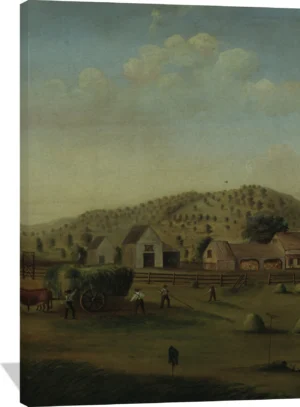
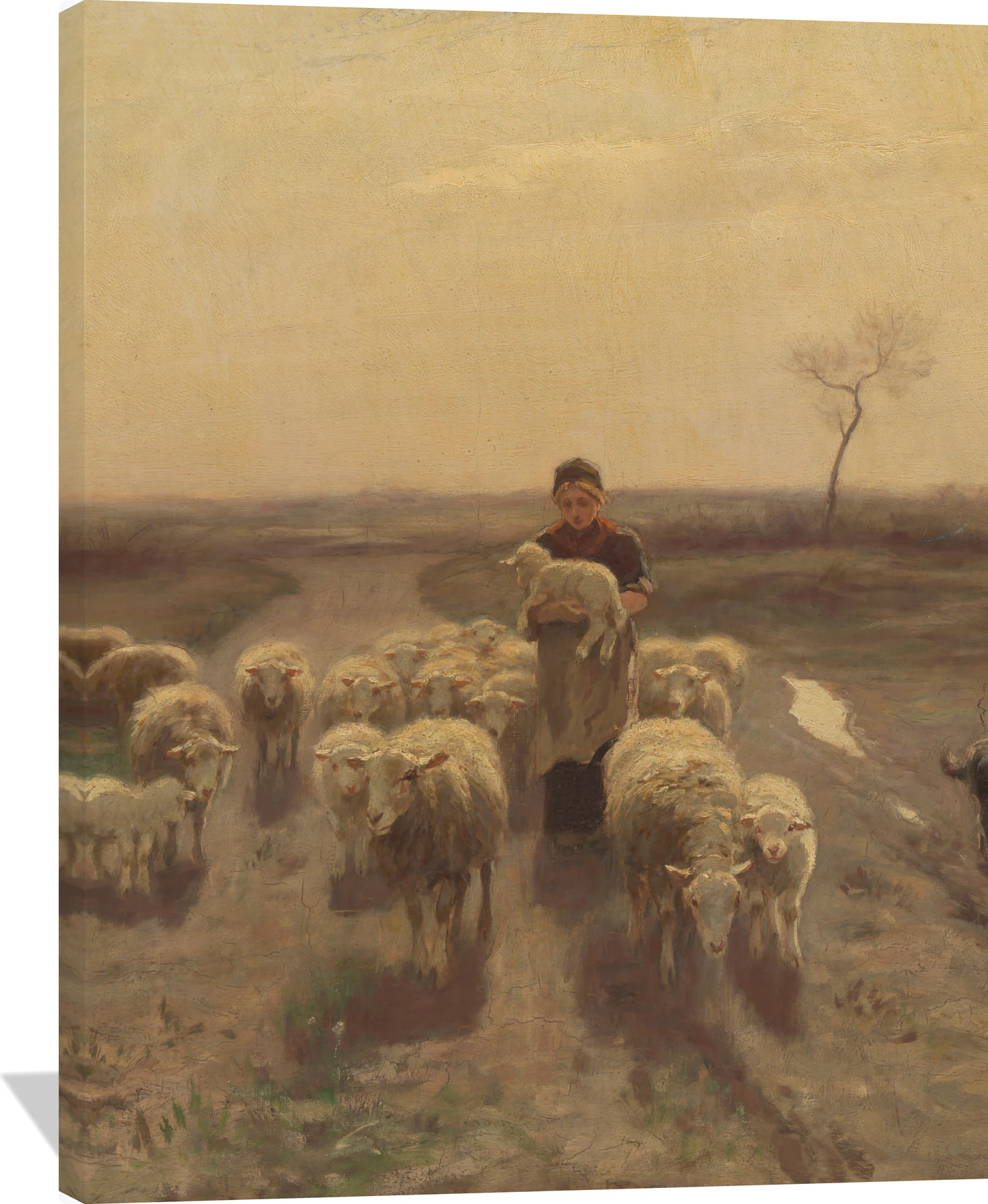
The Anton Mauve A Shepherdess and Her Flock canvas captures a serene pastoral moment bathed in golden light. A young shepherdess guides her sheep along a quiet country path, surrounded by soft earth tones of ochre, cream, and muted green. Mauve’s masterful brushwork and gentle realism evoke the calm rhythm of rural life and the warmth of a fading afternoon.
This timeless wall art brings a sense of peace and natural beauty to any space. Perfect for a living room, study, or entryway, this exquisite canvas print celebrates the harmony between humanity and nature in a way only Mauve could convey.
Anton Mauve (1838–1888) was a Dutch painter whose lyrical vision of rural life made him a central figure of the Hague School. Born in Zaandam and active across the Netherlands, he helped shape a movement defined by atmospheric realism and a deep sensitivity to light, weather, and the rhythms of the countryside.
Artistic Style
Mauve is celebrated for his naturalistic, gently tonal palette, which conveys the quiet poetry of everyday rural work. His brushwork often feels soft and fluid, capturing shifting light with subtle gradations that became a hallmark of the Hague School. His mastery of subdued color imbues his scenes with emotional depth and a sense of lived experience.
Subjects and Themes
Mauve frequently depicted shepherds, flocks of sheep, and farmers at work, focusing on the harmony between people and the land. His images of the Dutch heathlands, meadows, and farmyards reflect an intimate understanding of rural labor and its quiet dignity. Works such as his iconic shepherd scenes and tranquil winter landscapes highlight his ability to find beauty in modest, everyday moments.
Legacy and Significance
A mentor and early influence on his younger cousin Vincent van Gogh, Mauve played a crucial role in shaping modern Dutch painting. His commitment to portraying rural life with honesty and humanity contributed to a shift toward more direct, emotionally resonant realism. Today, his paintings are admired for their gentle mood, authenticity, and exceptional atmospheric quality, securing his place as a key figure of the Hague School and a lasting voice in 19th‑century European art.